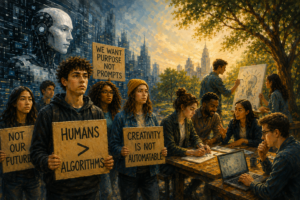

Artificial intelligence is rapidly transforming the modern workplace, reshaping how organizations operate, compete, and grow. From AI-powered analytics and machine learning to automation, predictive modeling, and data-driven decision-making, companies across industries are integrating advanced technologies to improve efficiency and unlock new opportunities. For professionals in tech, data analytics, and AI-driven careers, this shift represents both a competitive advantage and a critical inflection point. While AI can process massive datasets and identify patterns at scale, it remains limited in one essential area—leading people. That distinction is becoming increasingly important as organizations move deeper into digital transformation and rely on AI to support core business functions.
What AI Is Actually Doing in the Workplace
AI has evolved far beyond experimentation and is now embedded in everyday business operations. Organizations are using artificial intelligence and big data analytics to forecast demand, optimize supply chains, personalize customer experiences, and streamline hiring processes. These capabilities enable faster and more informed decision-making, particularly in industries driven by business intelligence and advanced analytics. However, despite these technological advancements, AI cannot interpret human emotion, manage complex interpersonal dynamics, or evaluate the long-term ethical implications of decisions. As machines take on more analytical responsibilities, the role of leadership becomes more focused on judgment, communication, and the human impact of technology adoption.
Why Leadership Is the Real Competitive Advantage in the Age of AI
As AI continues to expand across the workplace, the need for strong leadership is not diminishing—it is intensifying. Many assume that automation reduces the need for human oversight, but in reality, organizations without thoughtful leadership often face challenges such as employee resistance, lack of trust, and ethical concerns. In AI-driven organizations, leaders must guide how technology is implemented, ensuring alignment with both business goals and human values. Without this guidance, companies risk creating environments where decisions are efficient but disconnected from employee well-being and organizational culture. For Millennial and Gen Z professionals, especially those pursuing careers in AI, data analytics, and digital transformation, leadership is becoming a defining factor in long-term career growth.
The Ethics Challenge AI Cannot Solve
One of the most pressing issues in artificial intelligence is the challenge of AI ethics and algorithmic bias. AI systems learn from historical data, which can include existing social and organizational biases. As a result, these systems can unintentionally reinforce inequalities in hiring, promotions, and decision-making processes. Research has shown that machine learning models can produce biased outcomes when trained on incomplete or unrepresentative data. This highlights a critical truth: AI is not inherently objective. It requires human oversight to ensure fairness, accountability, and responsible use. Leaders must ask the questions that technology cannot—questions about impact, ethics, and long-term consequences. In a data-driven world, ethical leadership is no longer optional; it is essential.
What AI Cannot Replace: The Human Advantage
Despite rapid advancements in artificial intelligence and automation, there are fundamental human capabilities that technology cannot replicate. Skills such as emotional intelligence, ethical reasoning, communication, and trust-building are increasingly recognized as core competencies in the modern workforce. In fact, as AI takes over routine and analytical tasks, these human-centered skills are becoming the true differentiators for professionals in tech and data-driven careers. The ability to translate data into meaningful strategy, inspire teams, and navigate complex decisions positions leaders to drive sustainable success. In an AI-powered economy, these are not soft skills—they are high-demand leadership skills.
Human-Centered Leadership in a Digital Economy
Human-centered leadership focuses on integrating technology with purpose, ensuring that innovation enhances rather than replaces human potential. This approach requires leaders to prioritize transparency, foster trust, and consider the broader implications of AI adoption. Organizations that succeed in digital transformation and AI integration are those that balance data-driven decision-making with human values. For professionals navigating careers in AI, machine learning, and business analytics, developing this leadership mindset is critical. It is no longer enough to understand technology; leaders must also understand how it affects people, organizations, and society as a whole.
The Bottom Line: Leadership Will Define the Future of Work
The future of work will not be determined by artificial intelligence alone—it will be shaped by the leaders who guide its use. Organizations that thrive will not simply be the most technologically advanced; they will be those that combine innovation with responsibility, strategy with ethics, and data with human insight. As the demand for AI, data analytics, and leadership skills continues to grow, professionals must evolve beyond technical expertise to become leaders who can navigate complexity with purpose.
That is exactly what the Master of Science in Data Analytics (MSDA) at the California Institute of Advanced Management is designed to do. This program equips students with advanced skills in data analytics, AI, and data storytelling, while grounding them in ethical leadership and Management as a Liberal Art. The goal is not just to prepare students for jobs, but to develop distinctive, purpose-driven leaders who can make meaningful impact in today’s data-driven world.